
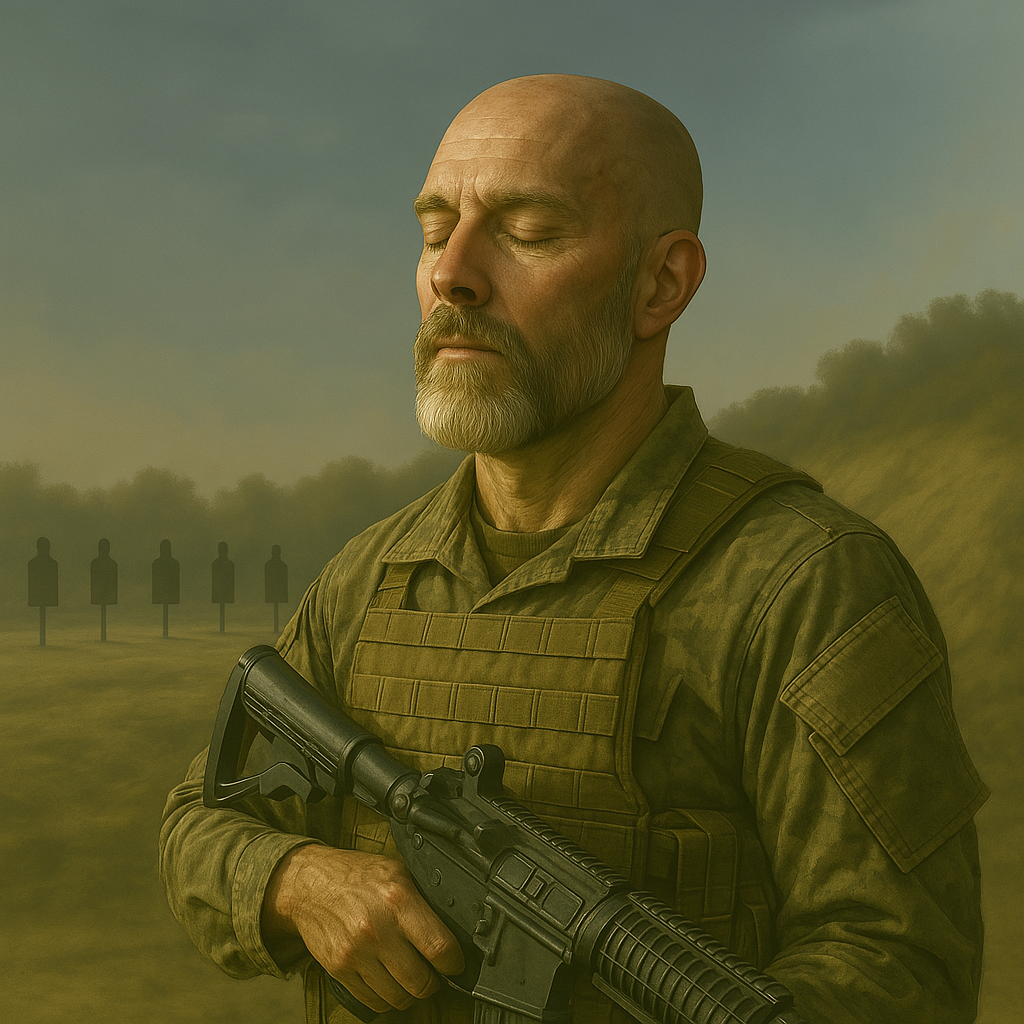
One of the things military and law enforcement veterans learned during training on the firing line was that our accuracy with a firearm could be increased by controlling our breathing. Steady breathing resulted in a more stable shooting posture and smooth trigger control which leads to more accurate shots and tighter groupings. This same idea about breathing applies to emotion regulation and distress tolerance.
Breathing is a Super Power
One of the best breathing techniques to learn and master is the Parasympathetic Sigh. Here’s how you do it.
- Take a slow deep breath in through the nose until your lungs start to reach maximum capacity.
- Without exhaling, take a sharper quick breath in through the nose
- Slowly release the breath through the mouth with an audible sigh
When we breathe using this pattern we are intentionally moving our body from a state of stress (fight, flight, or freeze) into a relaxed state (rest and digest). I like to think of it as our body’s brake pedal, we can use it to slow down when things start to get out of control.
When you use the Parasympathetic Sigh you will notice a decreased heart rate which promotes feeling calm, a sense of safety, and the ability to rest. Physiologically there is also a reduction in the stress hormone cortisol and a rebalancing of blood oxygen and carbon dioxide levels. This is a power tool to use when you are feeling anxious, overwhelmed, or angry and because it can be done quickly it is a clutch tool in a crisis.
If you ever remember a parent or teacher telling you to slow down and take a breath when you were worked up as a kid… this is the type of breath that would have been most helpful.
Practice
One of the realities of stress is that when adrenaline and cortisol start running we begin to lose physical and cognitive abilities. When things get hard we default to our lowest level of trained skills. That means that if we want to have the ability to use the parasympathetic sigh to help us when things get hard we have to practice it.
I have found it to be useful to practice this skill intentionally as part of my weight lifting as part of my recovery after a set. You can also combine it with cold or heat exposure. It is also useful to use it right before bed as a way to prepare for sleep. I also find it useful right before I meet with a client or before I start a lecture.
Just like any other tactic, you want enough practice and experience with it so that when you need it the skill can be employed without much thought or effort. Best case is that you use it so often that it is a default behavior that keeps you calm, cool, and collected.
Give it a try… you can do it right now.
Thanks For Reading
If you found this helpful, you can read all of my Daily Reflections at www.tacticstotalwellness.com/blog
You can also sign up for my weekly newsletter to get a simple email on Sunday with links to my explorations and reflections over the past week. https://tacticstotalwellness.com/news-letter/
