
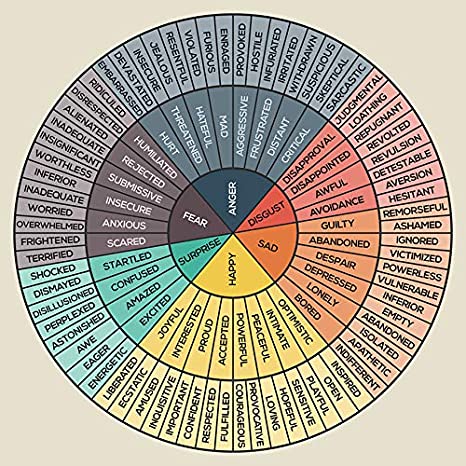
Emotions are not the enemy. Misunderstood emotions are.
To operate at full capacity — whether in a high-stakes profession, family role, or personal transformation — you need more than physical readiness. You need emotional intelligence. And that starts with knowing what you’re feeling, why it’s there, and how to respond without suppressing or exploding.
This post breaks down six core emotions — fear, disgust, happiness, anger, sadness, and surprise — along with some of their more complex derivatives, giving you a resource for decoding what’s going on inside so you can face it with clarity and understanding.
Why Understanding Emotions Increases Mental Fitness
Most people aren’t taught how to feel. We’re taught to act tough, stay in control, or “get over it.” But when you don’t have a clear internal emotional map, you’re likely to end up lost in the woods.
Increasing your emotional vocabulary:
- Improves decision-making under stress
- Strengthens relationships
- Increases stress tolerance
- Helps you identify and meet your own needs
It also reduces the risk of burnout, blowouts, or long-term emotional disconnection.
The 6 Core Emotions — and What They’re Trying to Tell You
Each core emotion is a signal. None of them are “bad.” They’re part of the human operating system — evolved to help you detect threats, connect with others, recover from loss, and pursue what matters.
The trouble starts when we ignore or misinterpret the signal. When we treat emotions like distractions or threats instead of intel, we cut ourselves off from one of our most powerful internal tools.
Every core emotion serves a specific purpose:
- Fear alerts you to danger so you can prepare or protect
- Disgust sets boundaries and warns you when something violates your values
- Happiness reinforces behavior that aligns with safety, connection, and meaning
- Anger shows you where something isn’t right and fuels action
- Surprise is the emotional “interrupt” that makes new awareness possible
- Sadness signals loss or change and invites support and reflection
When you understand what these emotions are trying to do — not just how they feel — you stop reacting out of confusion or shame. You start responding with clarity, skill, and strength. That’s the foundation of emotional intelligence and mission-focused mental fitness: treating emotion as actionable data, not a weakness to suppress or avoid.
😨 Fear
Purpose: Protects you from harm
Felt As: Tension, racing thoughts, heightened alertness, freezing, panic
Common Triggers: Uncertainty, vulnerability, threat (real or perceived)
Healthy Function: Alert system and motivator for preparation or caution
Derivative Emotions:
- Anxiety: fear projected into the future
- Worry: fear trying to plan its way out
- Insecurity: fear of not being enough
- Shame: fear of disconnection or unworthiness
Tactical Response:
- Grounding + reality check: Is the threat real, perceived, or assumed?
- Exposure in small doses builds resilience
Example: A retired medic feels a wave of panic when his teenage daughter doesn’t answer her phone after curfew. His chest tightens, thoughts race to worst-case scenarios. But a grounding breath and a mental check-in remind him: this isn’t combat—it’s a common parenting moment. He texts again, waits five minutes, and gets a casual reply: “Sorry, phone was on silent.” The fear was real—but it didn’t require a battlefield response.
🤢 Disgust
Purpose: Protects from contamination — physical, moral, or psychological
Felt As: Revulsion, withdrawal, resistance, judgment
Common Triggers: Injustice, betrayal, manipulation, moral violations
Healthy Function: Helps define personal and social boundaries
Derivative Emotions:
- Contempt: disgust + superiority
- Moral outrage: disgust + anger + ethics
- Repulsion: intense need to distance from harmful behavior
Tactical Response:
- Clarify values behind disgust
- Don’t confuse disgust with avoidance — lean in when needed
Example: A former law enforcement officer sits through a staff meeting where a colleague casually jokes about manipulating a client’s trust to get compliance. There’s no laugh—just a twist in his gut. The disgust is instant. It’s not about the joke—it’s about a boundary being crossed. That moment of revulsion draws a line: this isn’t how we treat people, even when the pressure’s on. He follows up later, one-on-one, to reset the ethical tone.
😊 Happiness
Purpose: Signals alignment with purpose, connection, and pleasure
Felt As: Lightness, openness, motivation, ease
Common Triggers: Fulfillment, safety, play, love, belonging
Healthy Function: Reinforces adaptive behavior, creates momentum
Derivative Emotions:
- Contentment: sustainable satisfaction
- Excitement: high-arousal anticipation of reward
- Gratitude: joy + appreciation
Tactical Response:
- Savor, don’t chase
- Let joy build capacity — it’s not a distraction, it’s fuel
Example: After months of transition out of the military, a veteran spends a quiet afternoon fishing with his son. No phones, no agenda — just calm water and shared time. He feels it: the kind of happiness that doesn’t shout, but settles deep. For a moment, there’s no urge to fix, fight, or push forward. That peace? It’s not weakness. It’s earned. And it’s worth protecting.
😠 Anger
Purpose: Protects boundaries and signals violation
Felt As: Heat, tension, pressure, urge to act
Common Triggers: Injustice, disrespect, betrayal, obstruction
Healthy Function: Activates protection and power
Derivative Emotions:
- Frustration: blocked goals
- Resentment: unspoken boundary crossed repeatedly
- Rage: accumulated, unprocessed anger
- Indignation: anger with a moral frame
Tactical Response:
- Ask: What boundary has been crossed?
- Choose action, not reaction
Example: During a team meeting, a firefighter watches a supervisor dismiss a rookie’s valid safety concern with sarcasm. His jaw tightens, fists clench under the table. The anger surges—not just for the disrespect, but for the potential risk it creates. Instead of snapping, he makes a mental note, cools down, and circles back after the meeting: “We need to talk about how we handle concerns on scene. That kind of shutdown can cost someone their life.” Controlled anger becomes leadership in action.
😲 Surprise
Purpose: Captures attention and prepares for rapid adaptation
Felt As: Startle, stillness, rapid mental scanning, heightened alertness
Common Triggers: Unexpected events, new information, rapid change
Healthy Function: Interrupts autopilot, creates openings for growth or protection
Derivative Emotions:
- Awe: surprise + wonder
- Shock: intense surprise + fear
- Confusion: surprise + lack of clarity
- Curiosity: surprise + safety + interest
Tactical Response:
- Pause and orient — surprise is a signal, not a command
- Ask: What changed, and what does it mean?
- Use surprise as a reset — it’s often the doorway to insight
Example: A veteran turned entrepreneur receives sudden, unexpected criticism during a presentation. For a split second, his brain locks up — heart rate spikes, room goes silent. But instead of defending or shutting down, he lets the moment land. He breathes, asks a clarifying question, and pivots. That short burst of surprise didn’t break him — it sharpened him. Surprise, when met with skill, becomes a tool for recalibration.
😢 Sadness
Purpose: Signals loss, need for care, or internal change
Felt As: Heaviness, stillness, emptiness, fatigue
Common Triggers: Loss, failure, unmet needs, endings
Healthy Function: Invites reflection and connection
Derivative Emotions:
- Grief: sadness + loss + love
- Disappointment: sadness from unmet expectations
- Loneliness: sadness from disconnection
- Hopelessness: sadness without future belief
Tactical Response:
- Don’t rush it — sadness processed builds compassion
- Seek support — sadness invites connection, not isolation
Example: A police officer attends the funeral of a colleague lost to suicide. He wasn’t particularly close with the guy — a few calls together, some jokes at roll call — but the loss hits harder than expected. There’s a heaviness he can’t shake. That night, instead of numbing out with a drink or sitting alone in silence, he calls a friend that he served with in the military. They talk for an hour. Not about death, really — just life, and the job, and how they’re actually doing. The sadness is still there, but it’s not carrying all the weight alone anymore. Connection doesn’t erase sadness — it shares it, and that makes it bearable.
So What?
Understanding your emotions opens the door to new capabilities and possibilities.
You stop reacting out of fear or anger.
You start responding with clarity and control.
You build capacity, not just toughness.
This is the foundation of Mission Focused Mental Fitness — the ability to feel without folding, and the skill to regulate without shutting down. Start with naming what’s there. Then train yourself to face it on purpose.
📚 Additional Reading from the Exploring Emotions Series
- Exploring Emotions: Anger
One of the keys to living the life we want to live is learning how to work with anger instead of reacting from it. This post breaks down how to decode anger and use it as information rather than fuel for destruction. - Exploring Emotions: Fear
We are alive today because of fear, and we might not grow without it. This post reframes fear as a tool for survival and growth — not a weakness. - Exploring Emotions: Disgust
Disgust is an important safety mechanism that protects our integrity, values, and sense of justice. Learn how to work with this complex emotion instead of pushing it away. - Exploring Emotions: Sadness
Sadness can be like a yellow traffic light letting us know it’s time to pause and reflect. This post walks through the importance of allowing sadness and learning from it. - Exploring Emotions: Happiness
We often treat happiness like a goal we can chase and capture. This post challenges that idea and helps readers see happiness as a byproduct of alignment, not a finish line. - Exploring Emotions: Surprise
In the world of intelligence and security, surprise can be the difference between success and disaster. This post explores how to work with surprise as a tool for growth rather than a trigger for collapse.
Thanks for Reading
If you’re looking for practical tools to build resilience, mental clarity, and physical well-being, you’re in the right place. Tactics Total Wellness is based in Charleston, South Carolina, and I write weekly about mindset, performance, and integrated living for veterans, first responders, and high performers across the Lowcountry.
👉 You can explore more insights at www.tacticstotalwellness.com/blog
📬 Want tips like this delivered straight to your inbox every Sunday?
Sign up for the newsletter here: www.tacticstotalwellness.com/news-letter
💬 You can also learn more about my work as a counselor and how I help clients build strength, clarity, and direction here: https://tacticstotalwellness.com/about/
If you found this article helpful, please consider sharing it with a friend, co-worker, or family member.
Thank you for the support!
-Jon
