Jon Nelson, Counselor | Educator | Veteran

A retired United States Air Force Special Agent who is now a Mental Health Professional, and Teacher in Charleston, SC. His writing focuses on exploring tools to help people live the life they want to live.

Gritty, realistic illustration of two large industrial water filters, one pouring clear water and the other pouring murky water, symbolizing how mental schemas filter thoughts and beliefs.

Schemas: Our Thought Filtration System

Our minds don’t process the world in raw, unfiltered form. Instead, we rely on schemas—mental frameworks built from our experiences, values, and lessons learned—to quickly interpret information and decide what matters. Think of schemas like a water filter. A good filter removes harmful impurities and leaves you with something clear, usable, and safe. But if

Schemas: Our Thought Filtration System Read More »

Shield with checkmark icon representing safety in trauma recovery, part of Themes of Impact series

Themes of Impact: How Trauma Disrupts Safety

When we talk about safety in mental health, we’re talking about more than locked doors and bulletproof vests. Safety is the state in which a person feels secure in their environment and confident in their ability to protect themselves from harm — physically, emotionally, and psychologically. It’s both an external reality and an internal experience.

Themes of Impact: How Trauma Disrupts Safety Read More »

Square graphic with the text “Themes of Impact from Trauma” above five icons representing safety, relationship, power, esteem, and intimacy, on a dark textured background.

Understanding Trauma: Themes of Impact

Cognitive Processing Therapy (CPT) identifies five “Themes of Impact” — belief areas that are most often disrupted after trauma. These themes represent how we understand ourselves, other people, and the world. When they’re shaken, daily life can feel less stable and predictable. This overview explains each theme and offers practical ways to strengthen them using

Understanding Trauma: Themes of Impact Read More »

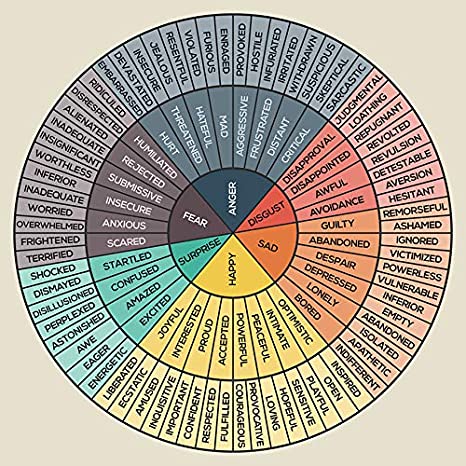
A labeled emotion wheel chart showing six core emotions—fear, anger, disgust, sadness, happiness, and surprise—radiating into complex secondary and tertiary emotions

Basic Training: Core Emotions

Emotions are not the enemy. Misunderstood emotions are.To operate at full capacity — whether in a high-stakes profession, family role, or personal transformation — you need more than physical readiness. You need emotional intelligence. And that starts with knowing what you’re feeling, why it’s there, and how to respond without suppressing or exploding. This post

Basic Training: Core Emotions Read More »

A three-panel comic-style illustration of a middle-aged man’s day: stretching outdoors at sunrise, working at a desk during the day, and having dinner with family at sunset. The image reflects physical, mental, and emotional balance.

Divide and Conquer: Structuring Your Day for Focus & Clarity

Time is your most limited and valuable resource. How you use it shapes your progress and your well-being. Success in anything — work, health, relationships — depends on how well you manage your time and energy. But too often, the day blurs together, and we’re left wondering where it all went. One simple way to

Divide and Conquer: Structuring Your Day for Focus & Clarity Read More »

An hourglass sits on a wooden desk in a garage gym while a wall calendar marked with red Xs tracks daily progress—symbolizing consistency, dedication, and the passage of time.

Time Has a Vote: How Consistency, Dedication, and Devotion Drive Real Change

When it comes to change—real, sustainable, embodied change—motivation gets the headlines, but consistency casts the deciding vote. We can talk about discipline, drive, and dopamine all day long, but the truth is: time has a vote. And it doesn’t care how fired up you were on day one. It cares what you did on day

Time Has a Vote: How Consistency, Dedication, and Devotion Drive Real Change Read More »

A middle-aged man in work clothes sits alone in a dimly lit garage, head bowed and hands clasped, with a notebook on the ground beside him and dawn light streaming in—symbolizing emotional exhaustion and the beginning of personal change.

Stages of Change: How Transformation Actually Works

Most people want change—but few are ready for how change actually happens. Change isn’t a switch you flip. It’s a process. Messy, non-linear, frustrating at times—but deeply human. Whether you’re trying to build better habits, recover from burnout, transition out of the military, or show up differently in your relationships—understanding the Stages of Change can

Stages of Change: How Transformation Actually Works Read More »

Scroll to Top